
Commercial Construction Services: Medical
Chevron Pattern:
Distinctive Features of Modern Wood Doors:
- Noteworthy V-shaped Composition: The chevron pattern is defined by a succession of V-shaped angles, achieved by positioning wooden elements at an angle to form a continuous zigzag configuration.
- Symmetry: Chevron patterns exhibit symmetry along the central axis, resulting in a harmonized and aesthetically pleasing arrangement.
- Dynamic Visual Appeal: The angular arrangement of wooden slats in a chevron pattern introduces movement and depth to the door’s surface, creating a visually engaging effect.
Historical Roots:
- Ancient Origins: Chevron patterns trace their roots back to ancient civilizations such as the Greeks and Romans, where they found application in various architectural and artistic endeavors. The earliest known use of the chevron pattern dates back to the 18th century BC in ancient Greece, where it adorned pottery and architectural elements.
- Military Symbolism: Historically, the chevron pattern has been associated with military contexts, symbolizing rank or accomplishment. Among the earliest recorded cases is its use in the military insignia of ancient Rome, where chevrons denoted different ranks within the Roman legions.
Modern Wood Doors- Practical Implementations:
- Contemporary Elegance: Chevron-patterned wooden entryways enjoy popularity in modern interior design, lending a contemporary elegance to residences, workplaces, and commercial establishments.
- Versatility: This pattern seamlessly complements diverse architectural styles, ranging from traditional to industrial, making it a versatile choice for interior embellishments.
Synergies with Other Styles:
- Minimalist Interiors: In minimalist settings, modern wood doors with chevron patterns inject visual intrigue without overwhelming the space, thus suiting clean and streamlined design schemes.
- Scandinavian Design: Chevron patterns harmonize with the natural elements and clean lines characteristic of Scandinavian design, adding warmth and texture to Nordic-inspired interiors.
Frequently Asked Questions (FAQ) about Medical Construction Services
What services do commercial construction companies provide?
Commercial construction companies typically provide a full range of services to plan, manage, and build commercial spaces. These services may include pre-construction planning, budgeting, scheduling, site evaluation, permitting support, design coordination, general contracting, construction management, tenant improvements, renovations, additions, and ground-up construction.
Many commercial contractors also coordinate subcontractors, materials, inspections, safety compliance, and project closeout to keep the project organized from start to finish.
How do I choose a commercial construction contractor?
Choose a commercial construction contractor with proven experience in projects similar to yours. Review their portfolio, licensing, insurance, safety record, references, and ability to meet your budget and timeline. A good contractor should communicate clearly, provide transparent estimates, explain the construction process, and help identify potential challenges early.
It is also helpful to choose a contractor who understands local building codes, permitting requirements, and the specific needs of your industry, whether that is retail, medical, office, hospitality, education, or another commercial use.
What is the difference between design-build and general contracting?
Design-build is a project delivery method where one company or team handles both the design and construction of the project. This can simplify communication, improve coordination, and often help reduce delays because the designer and builder work together from the beginning.
General contracting typically means the owner hires a designer or architect separately, then hires a general contractor to build the project based on completed plans. In this model, the general contractor manages the construction process, subcontractors, materials, scheduling, and site work.
How long does it take to complete a commercial construction project?
The timeline for a commercial construction project depends on the size, scope, complexity, permitting process, material availability, and inspection requirements. A small tenant improvement or office renovation may take a few weeks to a few months. Larger projects, such as medical facilities, schools, hotels, or multi-story office buildings, can take several months to more than a year.
Pre-construction planning, design, permitting, and approvals can also affect the overall timeline before construction begins.
What permits are required for commercial construction projects?
Permit requirements vary by location and project type, but commercial construction projects commonly require building permits, electrical permits, plumbing permits, mechanical/HVAC permits, fire safety permits, zoning approvals, signage permits, and occupancy permits.
Projects involving medical facilities, restaurants, schools, or public-use buildings may require additional approvals. A qualified commercial construction contractor can help identify the permits needed and coordinate with local authorities.
How much does commercial construction cost?
Commercial construction costs vary widely based on project size, building type, location, materials, labor, site conditions, design complexity, and required systems such as HVAC, plumbing, electrical, fire suppression, and accessibility features.
A basic office renovation will usually cost much less than a ground-up medical facility, restaurant, hotel, or specialized commercial space. The best way to determine cost is through a detailed estimate based on project plans, specifications, and site conditions.
Featured Medical Project Examples:
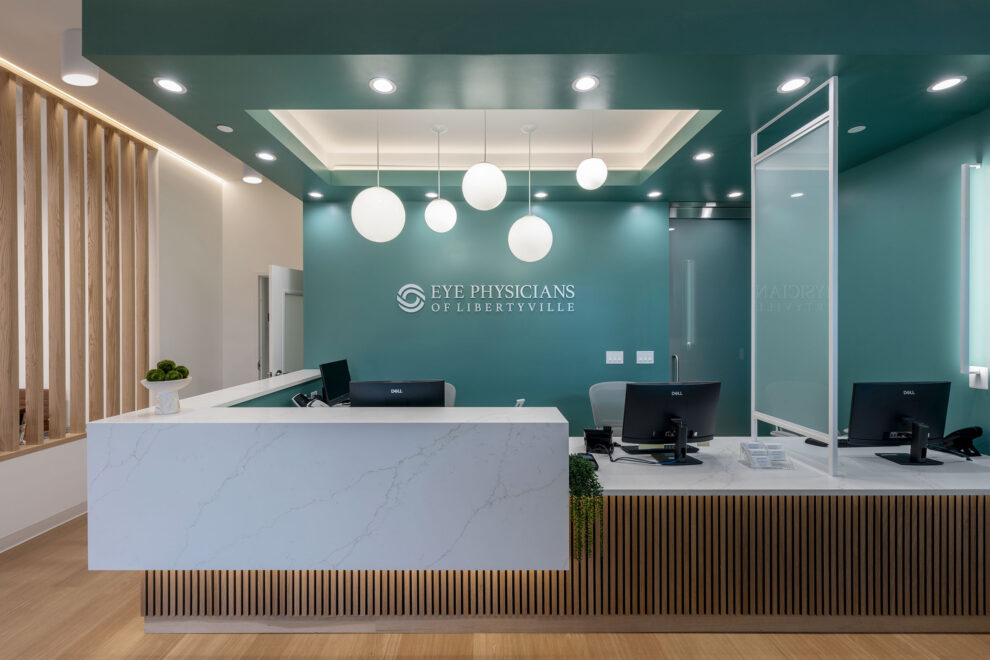
Commercial Project: Buildout of Eye Physicians of Libertyville
This project transformed an existing plastic surgery center into a modern eye doctor facility designed to provide exceptional patient care and support advanced diagnostic and treatment services. The renovation included interior reconfiguration, diagnostic testing areas, and contemporary finishes to create an efficient, welcoming healthcare environment.
Libertyville
learn more»
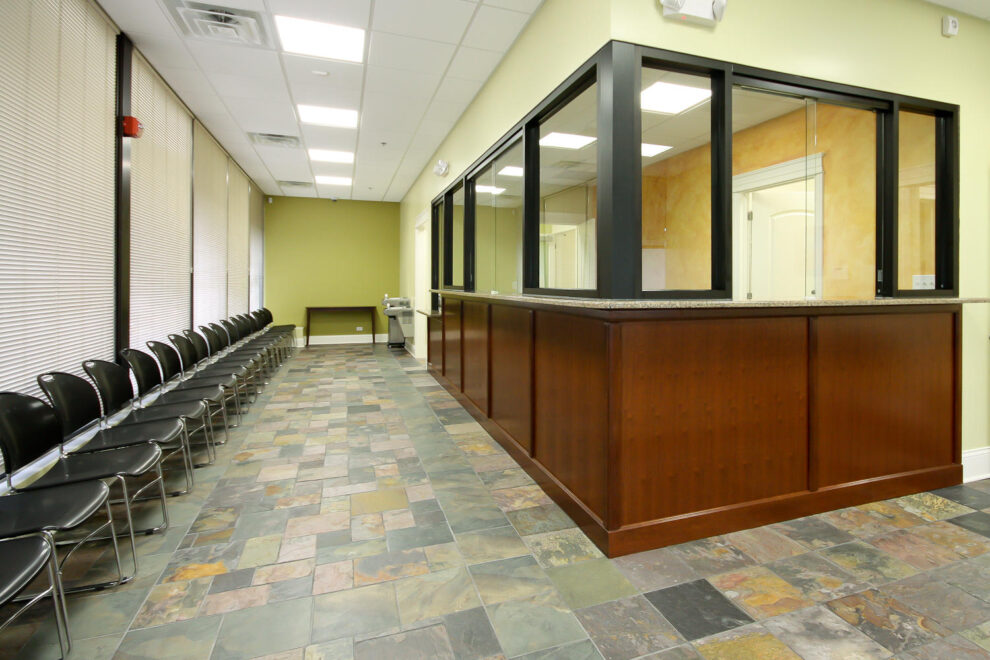
Lincolnwood Medical Center
Reconfigured an office building into a full-blown medical center and added an ADA elevator to the building so employees could easily access the basement storage.
Lincolnwood
learn more»


